If you run a business in the UAE, Australia, or Canada, you have probably had the same thought: a good software team in India could build this for less and move faster. You have probably also heard the horror stories of missed deadlines, vanishing agencies, and code nobody could maintain.
Both are true. Hiring an Indian software team works very well when it is done carefully, and fails badly when it is not. This guide covers what overseas founders should check, the real risks, and how to set up the engagement so you stay in control.
We are an Indian software company ourselves (IXT Minds, a registered LLP based in Lucknow), so we have a stake in this. We have tried to write the version we would want to read if we were the buyer, including the cases where India is not the right choice.
Why Founders Look to India in the First Place
The reasons are usually practical:
- Depth of talent. India has one of the largest pools of software engineers, designers, and QA specialists in the world, across web, mobile, and AI.
- Cost efficiency. Comparable teams usually cost less than in Australia, Canada, or the Gulf, which lets you build more or last longer on the same budget.
- Speed of staffing. A good agency can assemble a full team (design, frontend, backend, QA) in days instead of the months it takes to hire locally.
- Experience with international clients. Many Indian teams already work across multiple time zones and markets.
Those advantages are real, but only if you pick the right team and set the project up properly. Here is where most problems start.
Concern 1: Time Zones
The time difference sounds worse than it is, and it depends on where you are.
- UAE: about 1.5 hours behind India. Working hours overlap almost completely.
- Australia (Melbourne, Sydney): roughly 4.5 to 5.5 hours ahead of India depending on daylight saving. Your morning overlaps with the Indian afternoon.
- Canada (east coast): roughly 9.5 to 10.5 hours behind India. You will need a fixed overlap window, often an early morning for you and an evening for the team.
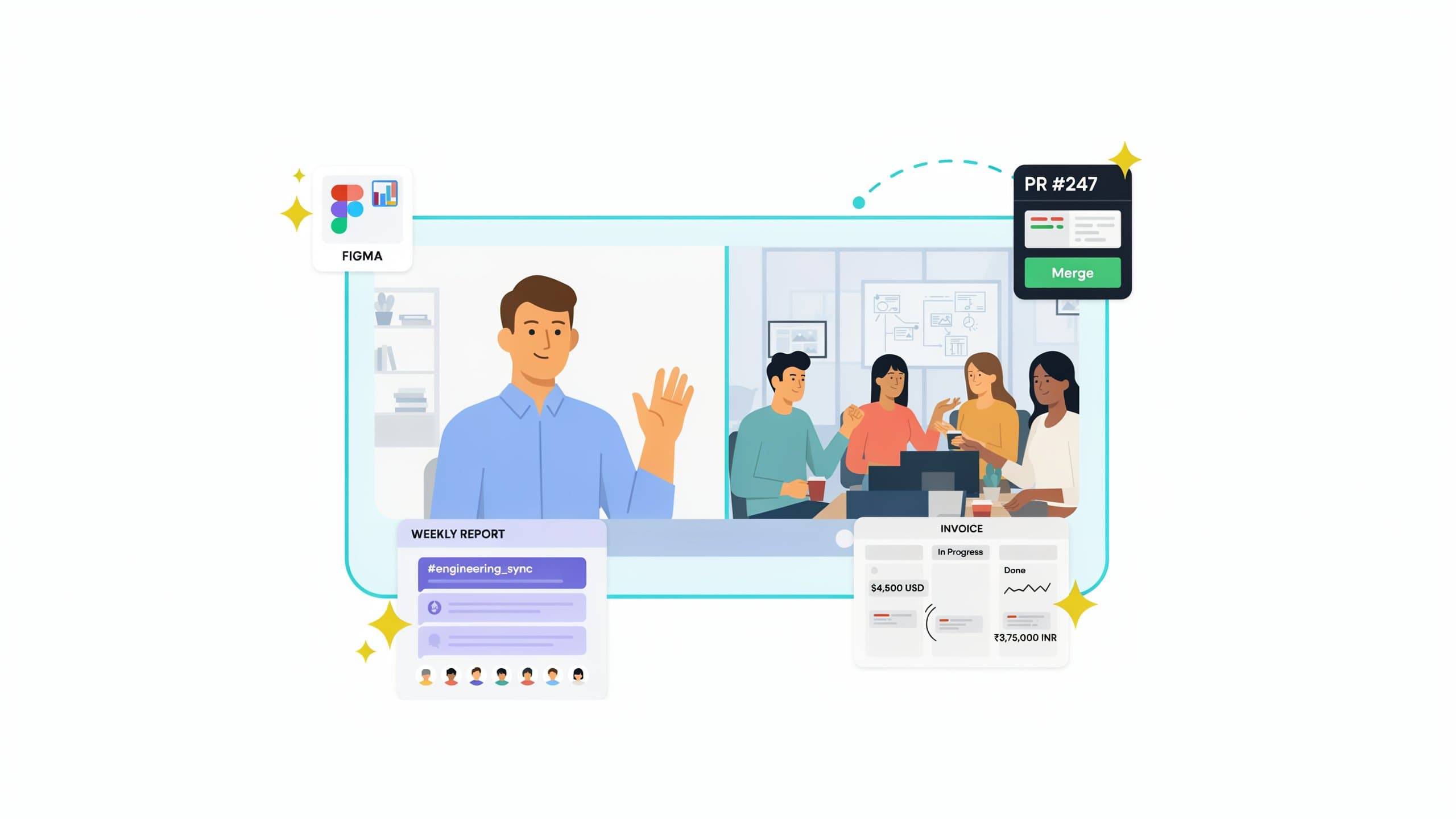
A fixed daily or twice-weekly overlap of two to three hours is enough for most projects. The rest of the time, the team works while you sleep, and you start your day with progress to review. Written updates, recorded demos, and a shared task board matter more than being online at the same time.
Concern 2: Communication and Accountability
Most offshore failures are communication failures. Before you sign, find out:
- Who is your single point of contact? You want a named project manager who speaks your language fluently and owns the delivery.
- How often will you see working software? Weekly or fortnightly demos are a minimum.
- What tools do they use? A shared board, chat, and recorded demos keep everything visible.
- How do they report problems? Good teams raise risks early. Weak ones hide them until the deadline.
If you cannot reach the person responsible when something goes wrong, no price is low enough to justify the risk.
Concern 3: Who Actually Builds Your Product
The people in the sales call are often not the people writing your code. Ask directly:
- Are the developers full-time employees, freelancers, or a subcontracted team?
- How senior are they, and have they built something like this before?
- Can you speak to the lead developer before the project starts?
Subcontracting is not automatically bad, but you should know about it before you sign. Our guide to scoping an MVP with 7 questions also shows what a serious discovery conversation should cover, which tells you a lot about a team's maturity.
Concern 4: Contracts and Intellectual Property
This is where overseas buyers protect themselves, and it is simple if you insist on the basics. Your contract should clearly state:
- Full ownership of code and designs assigned to you on payment
- Accounts in your name: app store developer accounts, cloud hosting, domains, and third-party services
- A written scope of work listing features, screens, integrations, and exclusions
- A change-request process that explains how new requests are priced and approved
- Confidentiality (NDA) covering your idea, data, and users
- Governing law and dispute handling that you are comfortable with
- Post-launch support terms, including what is covered, for how long, and at what cost
Have your own lawyer review the contract. A reputable team will not object.
Concern 5: Payments, Currency, and Tax
Keep payments structured and tied to delivery:
- Milestone-based payments linked to approved design, a working build, and launch
- Never full payment upfront. It removes your leverage if timelines slip.
- Agree the invoicing currency and payment method at the start, so exchange rates and bank fees are not a surprise.
- Ask about tax treatment of the invoices and confirm it with your own accountant, because the rules depend on your country.
Concern 6: Data Security and Compliance
If your product handles personal or financial data, security matters from day one. Ask the team:
- How is your source code and data stored, and who has access?
- Do your developers work under confidentiality agreements?
- How do you handle credentials, backups, and production access?
- Have you built products that follow the data protection rules in my market, for example Australia's Privacy Act or the UAE's data protection law?
Where your data is hosted can also matter for compliance. Decide that early, and keep the hosting accounts in your name.
How to Structure a Low-Risk First Engagement
You do not have to commit to a full build on day one. The safest way to start is a small, paid first phase.
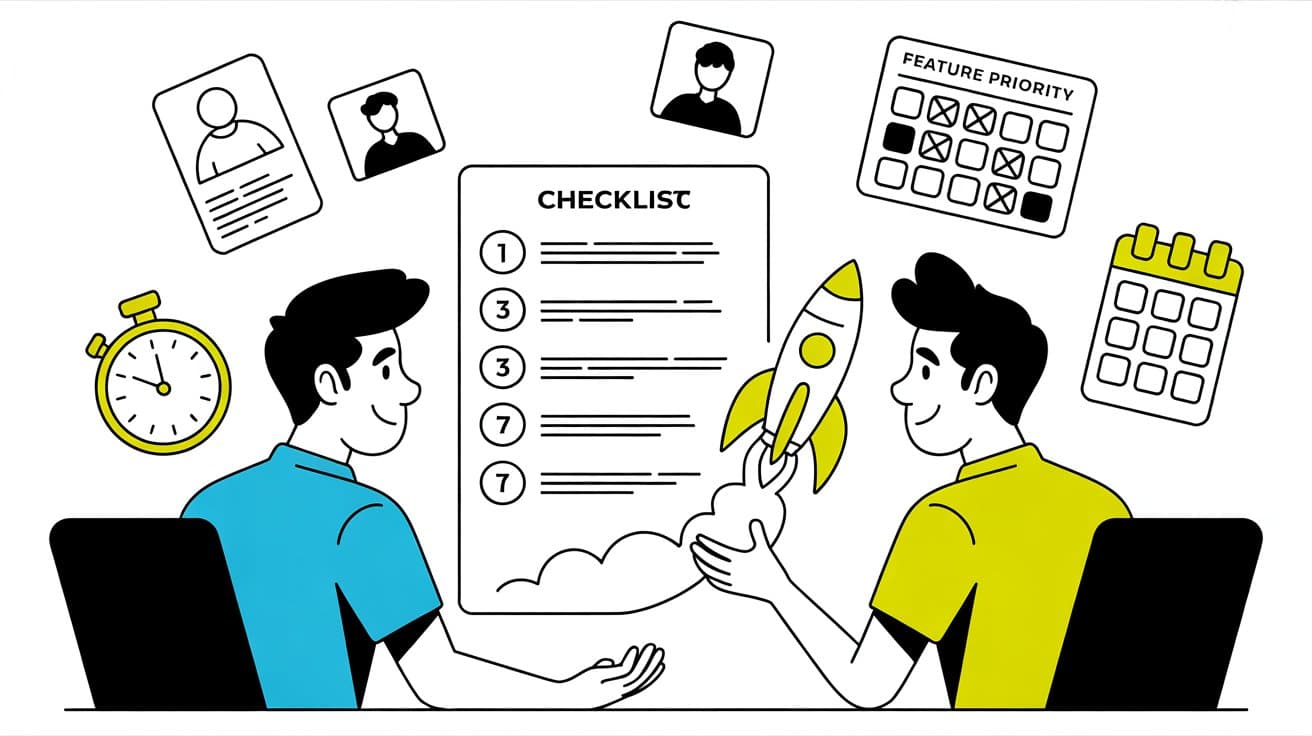
- Paid discovery (1 to 2 weeks). The team works with you on users, features, and a written scope. You see how they think, communicate, and handle disagreement.
- Design and prototype. You approve the screens and flows before any code is written.
- A first build milestone. A small, working slice of the product with real payment attached to it.
- Decide with evidence. If the working relationship is strong, continue with the full build. If not, you have lost very little and you own the output.
This approach filters out weak teams cheaply. A good team will welcome it, because it also protects them from a bad fit.
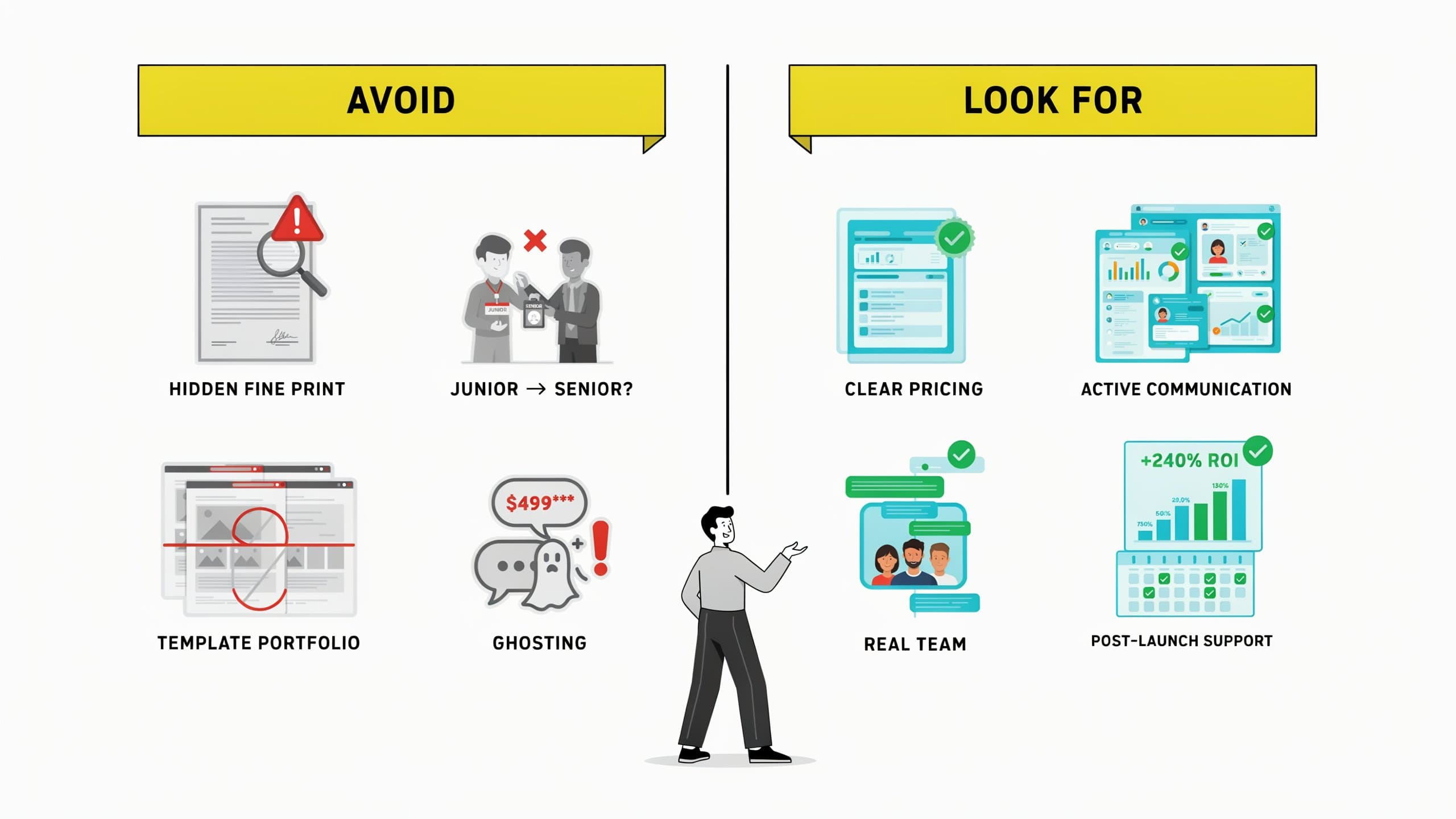
Red Flags That Should Make You Walk Away
- A fixed price quoted after a short call, with almost no questions about your product
- No live products to show, or reluctance to share client references
- Asking for full payment upfront
- Refusing to assign code ownership or to register accounts in your name
- Vague answers about who will build your product
- Promising an unrealistic timeline for the scope you described
- No written scope of work
When India Is Not the Right Fit
We would rather tell you than waste your time. An Indian team may not be right if:
- Your project needs constant on-site presence, such as hardware integration or strict on-premises security
- Regulation requires that the team be located in your country
- You need extremely tight real-time collaboration across the full working day in an opposite time zone
- You are not ready to write down a clear scope and review work regularly, because any offshore model needs that discipline
For the rest, a well-chosen Indian team can be an excellent partner.
Questions to Ask Before You Shortlist
- Can I open two live products you have built that are similar to mine?
- Can I speak to two past clients, including one overseas?
- Who will manage my project, and who will build it?
- What does your contract say about code and account ownership?
- How do payments work, and what is tied to each milestone?
- How will we communicate across time zones, and how often will I see working software?
- What happens after launch, who fixes bugs, and how are updates priced?
If you are also budgeting, our breakdowns of what a mobile app costs and what it costs to add AI to your app explain what drives the price, so you can compare quotes properly.
What We Recommend
Treat hiring an Indian team the way you would hire any serious partner: verify the proof, put everything in writing, start small, and judge them on how they communicate when things get hard. Do not choose on price alone.
IXT Minds builds mobile apps, websites, and AI products for clients across the UAE, Australia, Canada, and beyond. Every project begins with a written scope of work, you own the code and the accounts, and we stay on after launch. If you are weighing an offshore team, you are welcome to see how we build or talk to us. Bring the checklist above and hold us to it.