One platform that follows every crop from farm to market and records its carbon footprint.
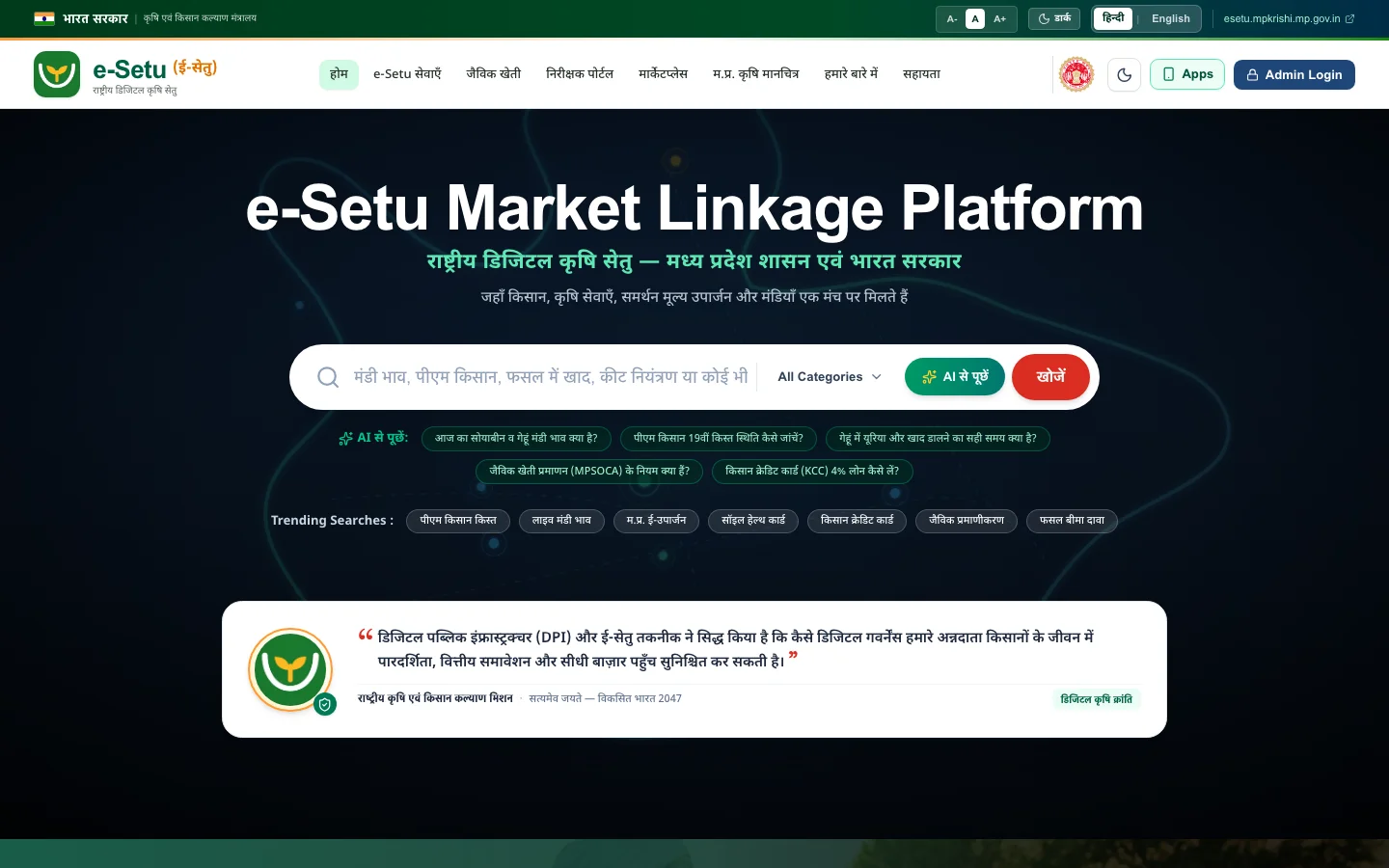
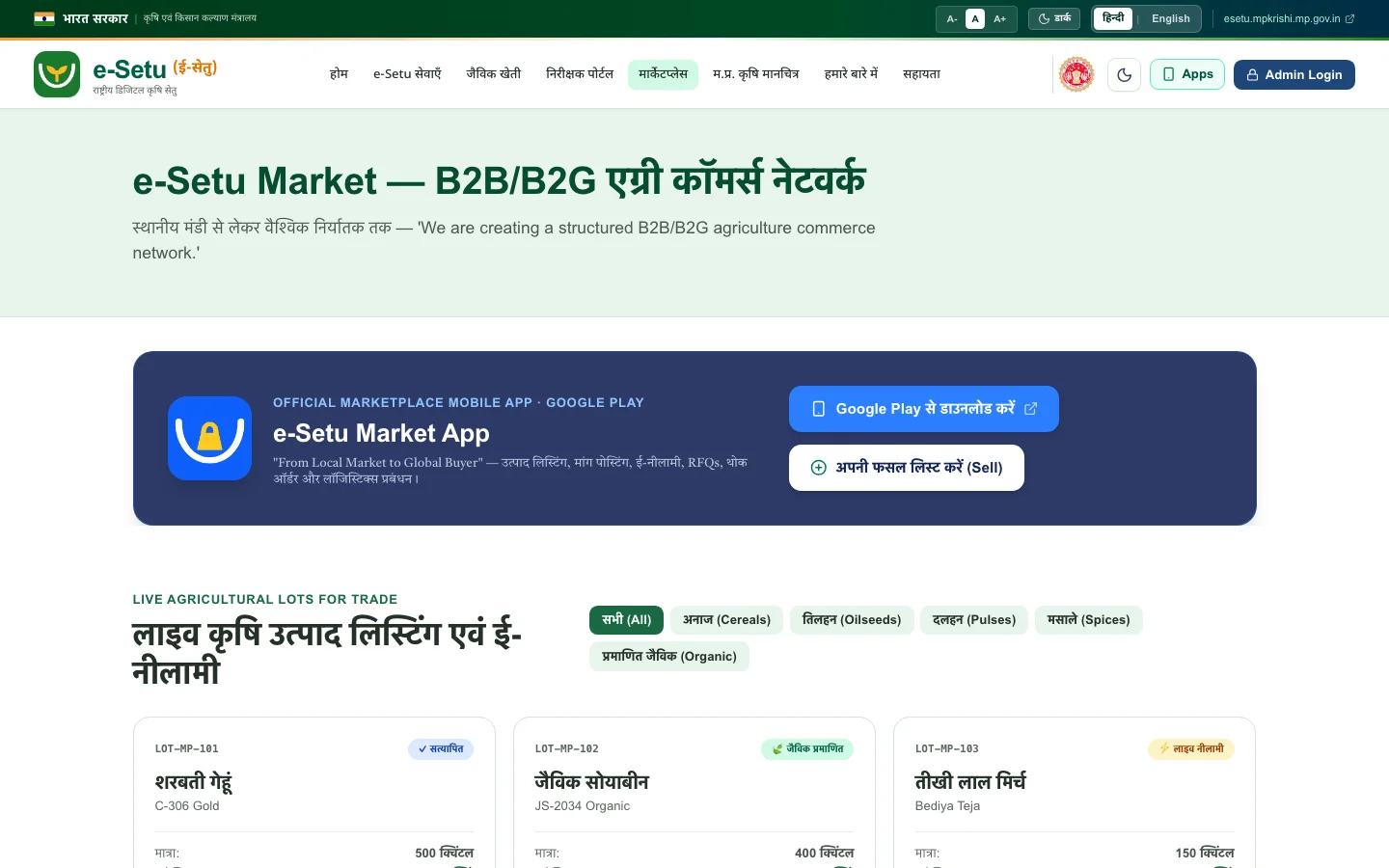
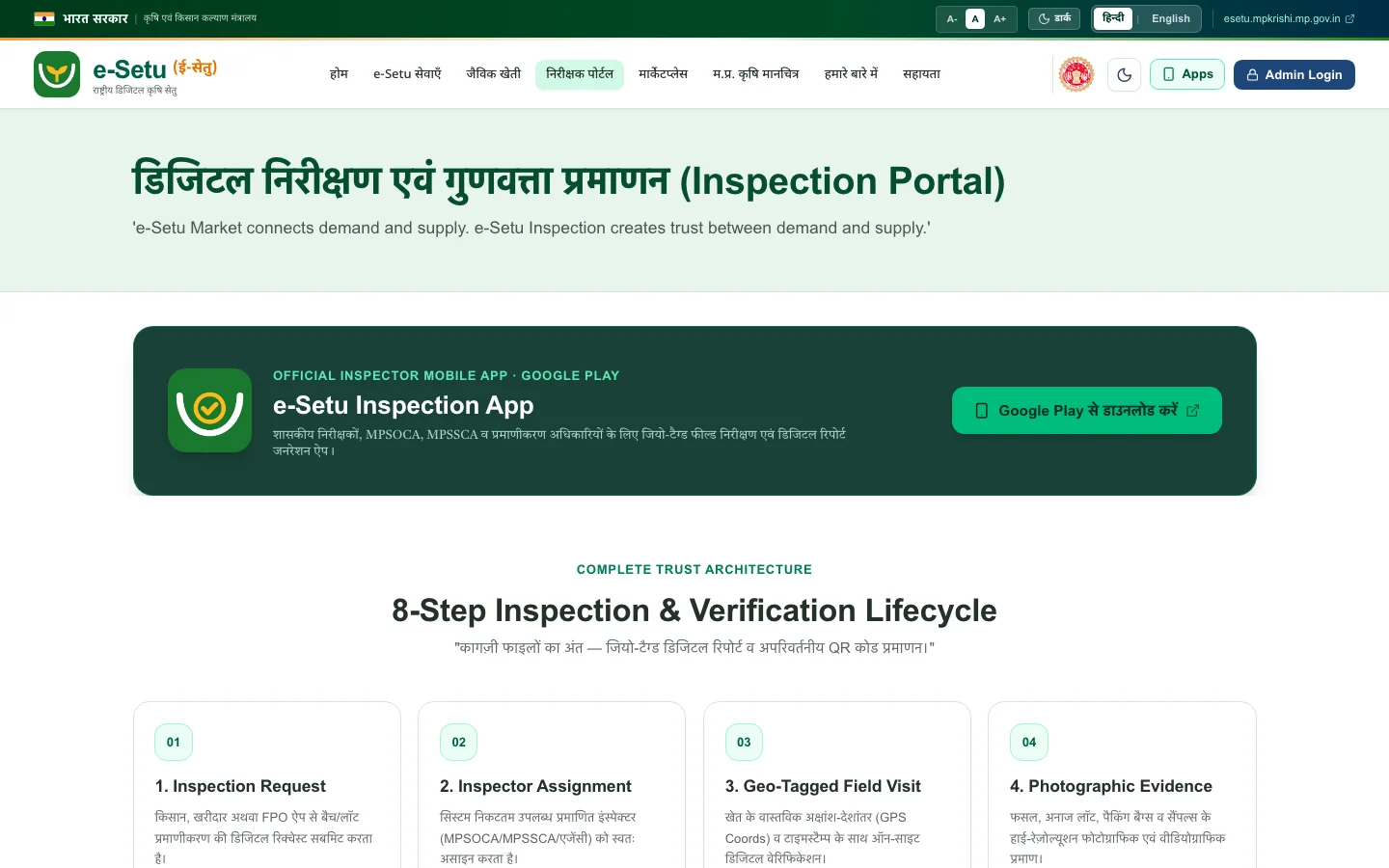
A unified digital agriculture platform that connects farmers, traders, logistics providers, inspectors and agencies on one system. We built three mobile apps, admin and carbon panels, a website and the backend, with value chain traceability, a marketplace, and farm-level carbon and GHG record-keeping.
What they were facing.
Smallholder farmers hold about 86% of Indian farms, yet they sell through long, opaque chains and keep only about a third of the consumer price on vegetables. Post-harvest losses run to roughly ₹1.5 lakh crore a year. Farm data, inspections, input records and sales sit in separate systems, so nothing can be traced from end to end. The platform had to bring farmers, traders, logistics providers, inspectors and agencies onto one system, work in English and Hindi, and stay simple enough for a farmer to use from a phone.
Long, opaque chains
Farmers keep only about a third of the consumer price on vegetables.
Costly losses
Post-harvest losses run to roughly ₹1.5 lakh crore a year.
Siloed data
Farm data, inspections, inputs and sales live in separate systems with no end-to-end trace.
Many roles
Farmers, traders, logistics, inspectors and agencies each need their own simple tools.
How we solved it.
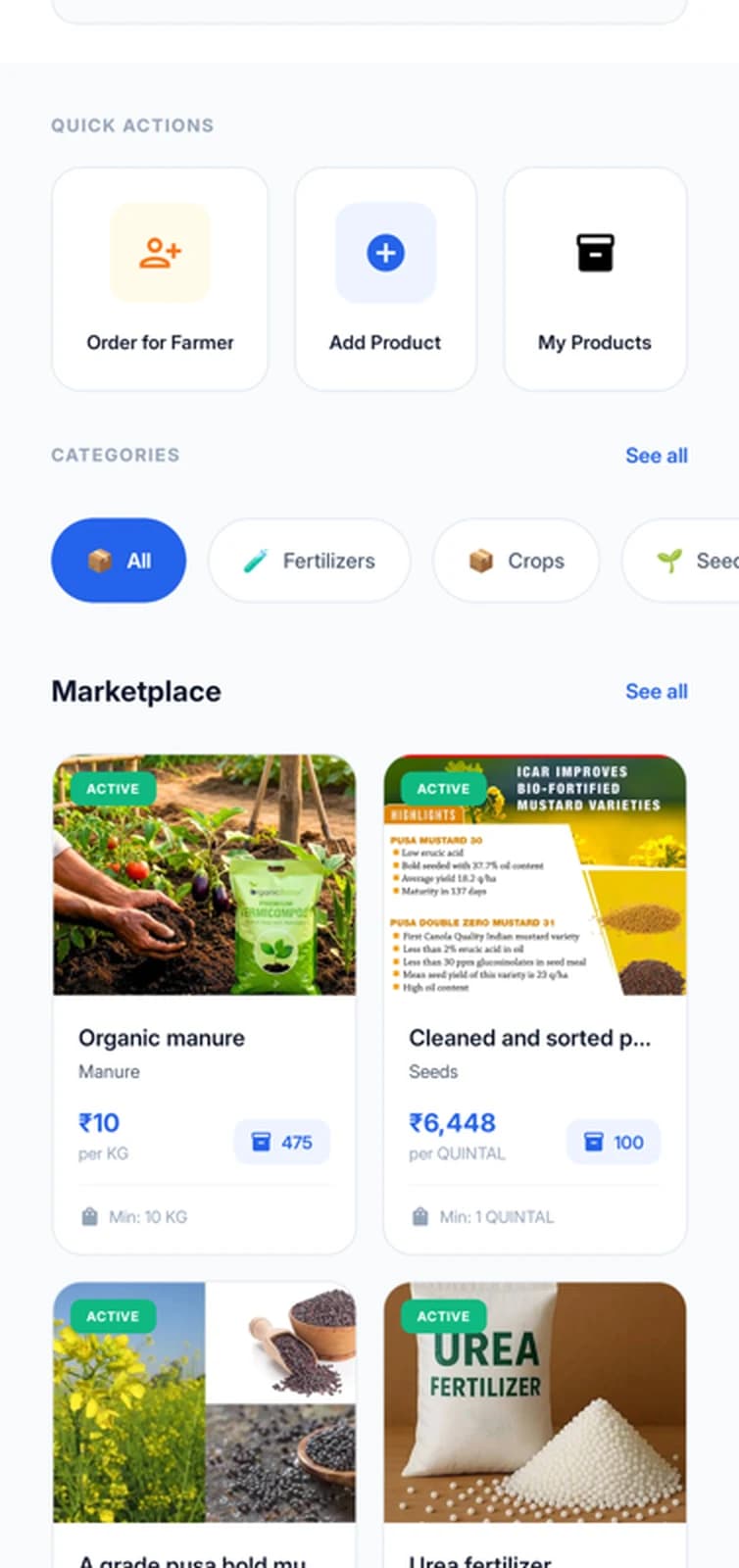
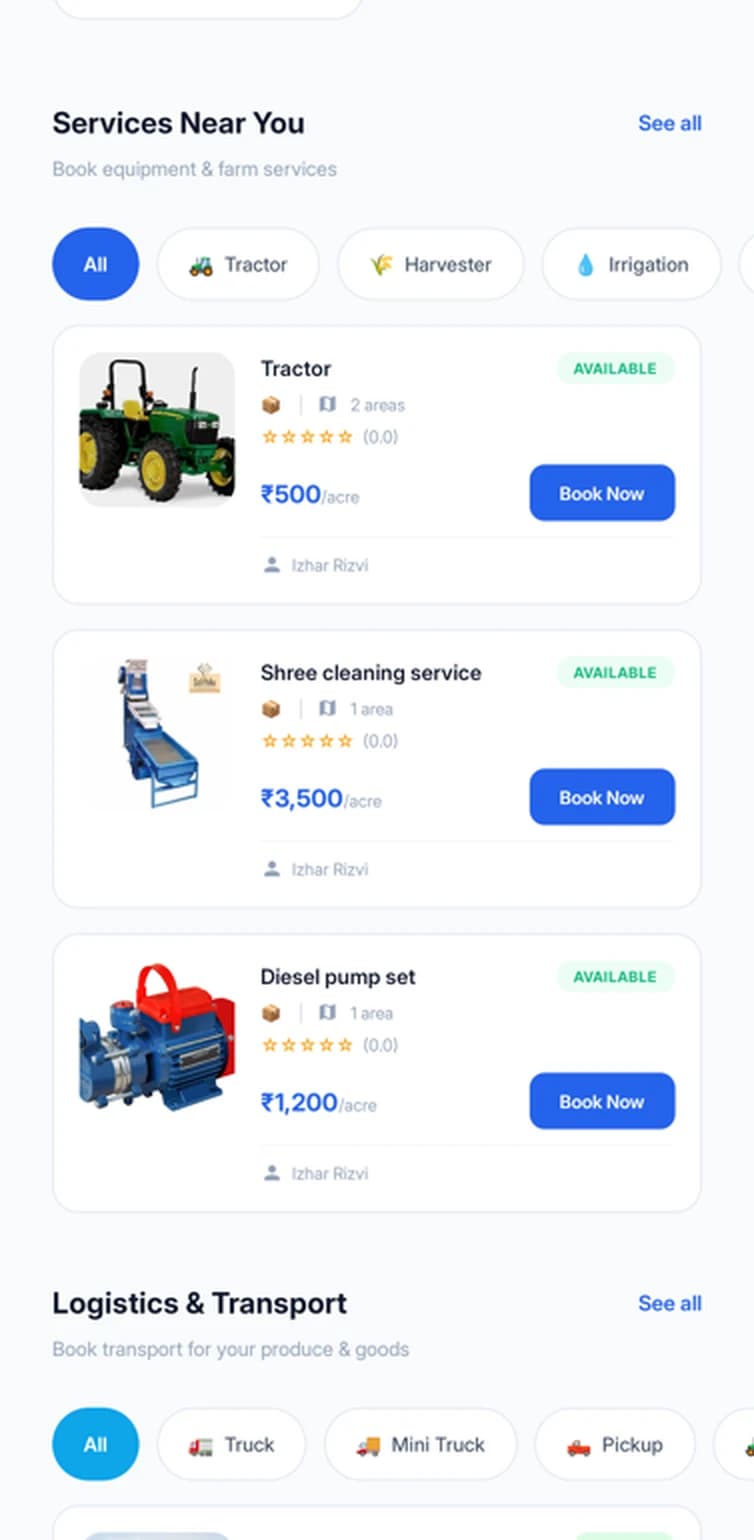
We built one backend with role-specific apps and panels, so every activity, inspection, order and emission record links back to the same farmer, land and crop. Value chain traceability follows a product from sowing and harvest through processing, packaging, transport and storage, with date, location and media at each step, so buyers can see where it came from. A marketplace covers products, equipment rentals such as tractors, harvesters and drones, logistics bookings, cart and checkout, invoices and payments, and lets traders order on a farmer's behalf. Farmers log fertiliser, diesel, electricity and other inputs per land and crop, admin-managed emission factors turn them into GHG estimates, and carbon credit records move through a Pending, Approved or Rejected review in a dedicated Carbon Panel. Inspectors work through geo-tagged, photo-backed checklists driven by configurable SOP templates, with reminders and missed-inspection handling.
Value chain traceability
Follow a crop from sowing to storage with date, location and media at each step.
One marketplace
Products, equipment rentals, logistics, orders, invoices and payments in one place.
Carbon and GHG records
Log inputs per land and crop, convert them with admin-managed emission factors, and approve carbon credit records.
Inspection and quality
Geo-tagged, photo-backed checklists, configurable SOPs and automated reminders.
From brief to launch.
- 1
Discover
Mapped how farmers, traders, inspectors and agencies work today and where data breaks.
- 2
Design
Role-based journeys, in English and Hindi, kept simple for use on a phone.
- 3
Build
Three React Native apps, admin and carbon panels, the website and one Node.js backend.
- 4
Launch
Published the apps on Google Play and onboarded users through assisted channels.
Recent case studies.
Ready to upgrade your product?
Tell us about your project and book a 30-min scoping call — no pitch deck, just a plan.
Start a project